
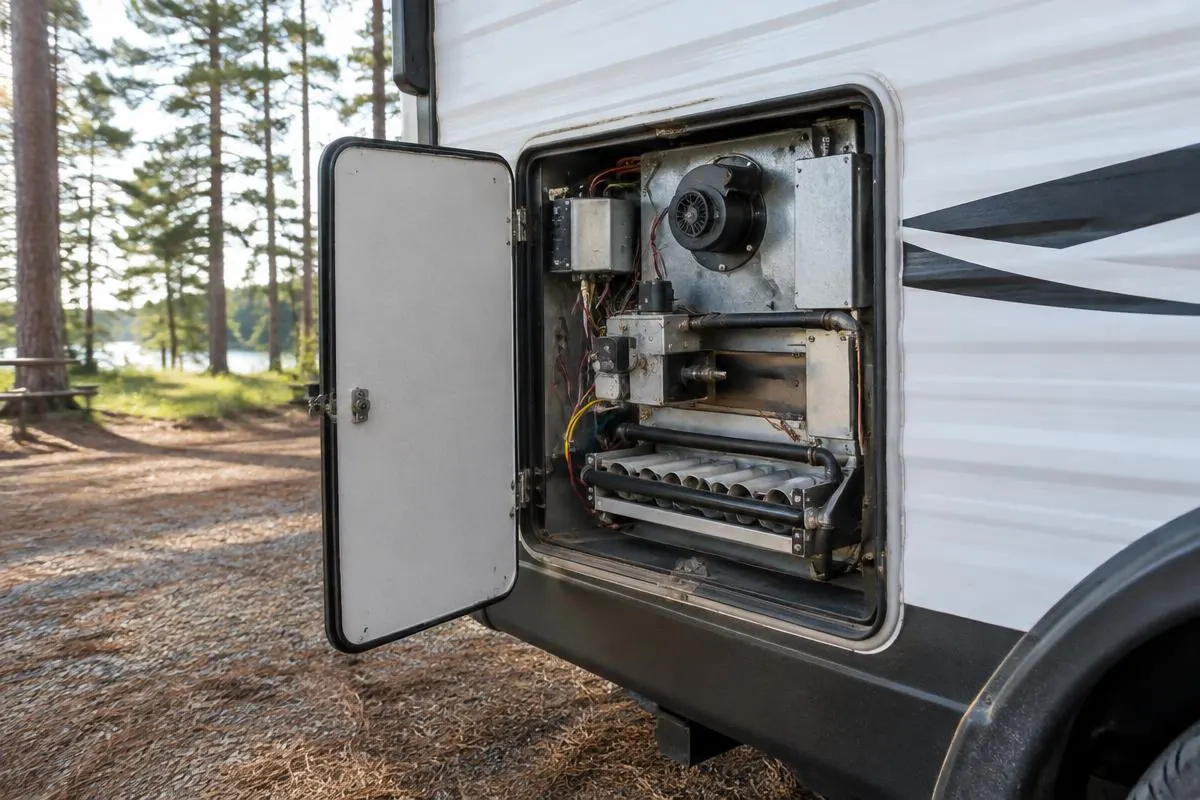
When an RV furnace will not light or blow warm air, start with the thermostat, the 12-volt battery, propane supply and unobstructed vents. Note whether the blower starts at all. A furnace fan that never runs points toward a different group of causes than a fan that runs for a short time but never produces heat. This distinction helps a technician plan the right checks, particularly when you are parked outside town.
Separate no fan from no heat
Set the thermostat to Heat and raise the setpoint above the room temperature. Check the accessible display and batteries if your thermostat uses them. Then look at the RV battery monitor and other 12-volt items such as interior lights. Many RV furnaces need a stable 12-volt supply to start their blower and controls even when the RV is connected to shore power. A weak house battery or charging problem may prevent normal operation.
Confirm fuel and airflow
Check the propane tank valve and fuel level following your RV's instructions. If other propane appliances also fail, tell the technician. Do not attempt to repair a regulator or gas line yourself. If you smell gas, leave the RV, avoid operating switches or flames, close the supply only if it is safe, and call your propane provider or emergency services from outside. Furnace trouble can wait; a suspected leak cannot.
Look for rugs, storage bins or furniture blocking interior return-air grilles or warm-air registers. Outside, check that the accessible intake and exhaust openings are not packed with debris or insect nests. Do not reach inside a burner or remove parts to clear it. Maintaining airflow is important for safe operation. A blower that starts and stops quickly may have an airflow, ignition or control issue that needs professional diagnosis.
What the ignition sequence tells you
In many RV furnaces, the blower runs before ignition. A sail switch must detect adequate airflow; then the controls can open the gas valve and fire the igniter. A dirty sail switch, weak blower, ignition fault or another safety-control issue can interrupt that sequence. These parts are not interchangeable guesses. Avoid bypassing any switch or safety device to force heat; the protections are there for a reason.
Listen and record what happens: fan only, clicking without heat, brief heat followed by shutdown, or repeated attempts. If the furnace makes a new scraping noise, trips a fuse repeatedly or produces soot, shut it down. Do not use a cooking stove or oven to heat the RV. If you need heat while waiting for service, follow the instructions for a safe alternative heater and maintain ventilation and clearances.
Prepare for the service visit
Write down the furnace make and model from its label if you can read it without dismantling anything. Tell the technician whether you are on shore power, the battery level, propane status and the exact startup behavior. A furnace in a Jasper County campground may be difficult to diagnose if fuel or power is unavailable during the visit, so note those conditions when you book.
Cold weather can arrive even when the trip began in a warm Southeast Texas afternoon. Testing the furnace before you leave Kountze, Beaumont or Orange gives you time to identify problems without losing a travel day. Anytime Mobile RV Service offers on-site heating diagnostics at an accessible campsite, driveway or storage location. Call if the simple checks do not bring back dependable heat.
Watch for safety warning signs
Keep the RV's carbon monoxide detector in working order and follow its instructions if it alarms. A furnace that seems to operate normally can still require attention when there is soot, a strong unusual odor or a vent that appears damaged. Turn the furnace off and arrange qualified service rather than trying to test a burner while it is running. Never block the outside furnace exhaust to keep rain or insects out during operation.
If the blower works but the furnace does not ignite, avoid treating a single click as a complete diagnosis. The same symptom can come from low voltage, restricted airflow, fuel supply trouble or ignition components. Furnaces use safety devices to stop operation when conditions are not right. A unit that lights and quickly shuts down likewise needs a careful inspection; turning the thermostat up farther will not correct the cause.
Before a trip to a state park, run a normal heating cycle while still at home and make sure the vents deliver warm air without a strange smell or sound. The first operation after storage may stir up dust, but ongoing smoke or a persistent odor is not something to ignore. Record the conditions and shut the equipment down if you are unsure. A dependable furnace makes a chilly night safer and more comfortable without improvised heat sources.
Related help
Anytime Mobile RV Service comes to your RV seven days a week, 5 AM to 7 PM. Call +1 855-350-4192 to discuss your repair.