
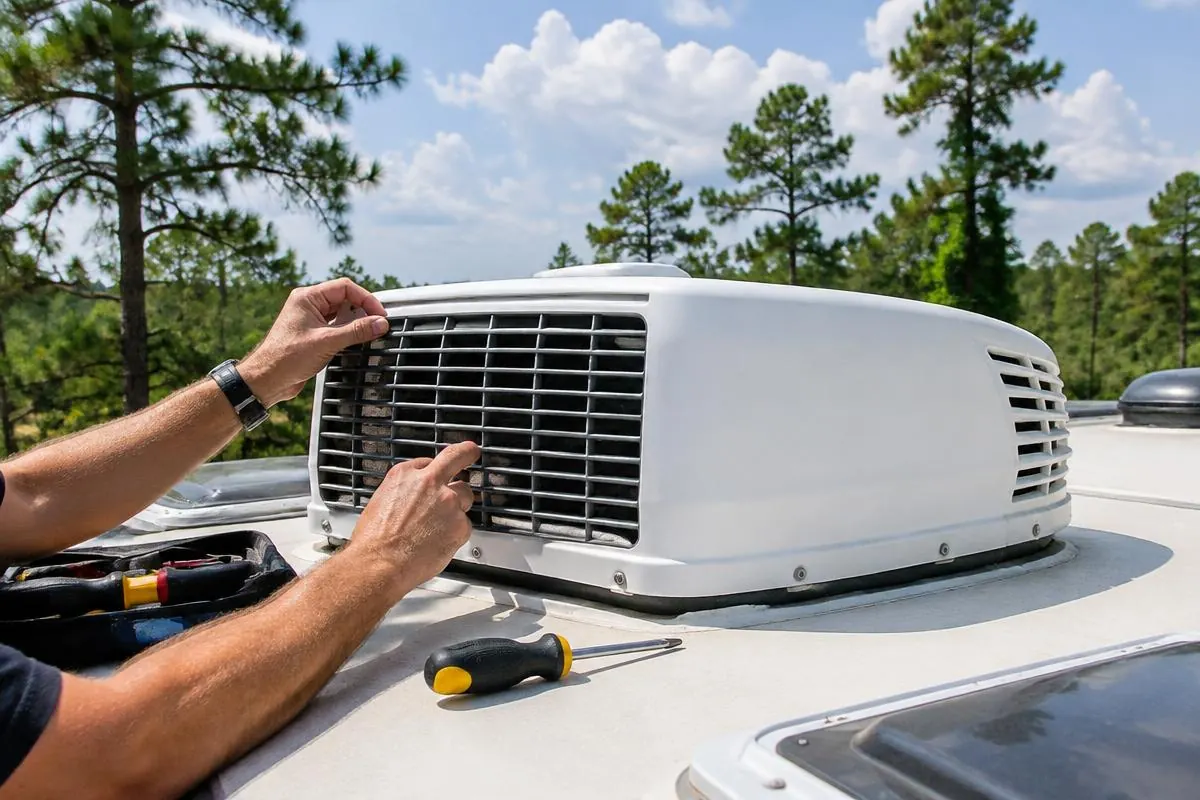
If your RV A/C is blowing warm air in Texas heat, check the thermostat mode, setpoint, shore power and return-air filter first. These checks are safe from inside the RV and can separate a simple airflow problem from a cooling-system fault. If the unit hums, trips a breaker or smells hot, turn it off and call a technician rather than repeatedly restarting it.
Start with settings and power
Set the thermostat to Cool, not Fan or Heat, and set it several degrees below the inside temperature. Give the compressor time to start. Fan-only mode moves room air without cooling it, so it can feel like a failed A/C on a humid afternoon. Some thermostats delay compressor restart for protection after a power interruption. If air begins cooling after the delay, note what happened but avoid cycling the controls over and over.
Check the campground supply
A rooftop compressor draws more power at startup than a fan. A weak or interrupted campground pedestal can leave the fan running while cooling fails. Check whether other RV appliances are working and whether a breaker has tripped. Use the correct rated shore-power connection for your RV. A 30-amp RV plug is not the same as a 50-amp connection, and adapters do not create extra electrical capacity.
Look at the plug and cord without touching exposed conductors. Discoloration, melting, a burning odor or a connection that feels unusually hot are stop signs. Disconnect power if you can do so safely and request professional help. Do not open a pedestal, bypass a breaker or run an extension cord that is not intended for RV shore power. If the campground supply appears unstable, tell the park staff as well as your RV technician.
Restore airflow before diagnosing cooling
With the system off, inspect the accessible interior return-air filter. Dust and pet hair restrict airflow, especially during long stays near Kountze, Silsbee and Beaumont. Clean or replace the filter according to the unit maker's instructions. Check that ceiling vents are open and nothing is blocking the return grille. Shut the windows and the roof vents while cooling so the unit is not constantly pulling in hot, wet outside air.
An RV rooftop A/C can struggle when the trailer has been parked in full sun all day. Close blinds on the sunny side and allow the interior to cool gradually. Warm air at startup does not by itself prove a failed compressor. Compare the air leaving the vents after the unit has run for a while with the room air, and note whether the flow is steady. Weak flow, ice at the interior grille or water where it does not belong deserves an inspection.
Know when to stop
Do not climb onto an RV roof just to inspect an A/C. Rooftop components contain electrical parts and the roof can be slippery, especially after a Gulf Coast shower. Do not remove covers or probe capacitors: they can hold a dangerous charge even with the power disconnected. If the unit repeatedly trips a breaker, makes new grinding noises or does not cool despite normal airflow and adequate power, the next step is diagnosis rather than guesswork.
When you call, have the A/C brand and model, RV model, hookup type and a short description of the symptoms ready. Mention whether the fan runs, whether the compressor starts, when the warm air began, and whether rain or a power interruption came first. Anytime Mobile RV Service can inspect a parked RV at a campsite, driveway or storage site across Southeast Texas. That keeps you from moving a hot RV solely to begin troubleshooting.
Keep a useful symptom record
Try a short, controlled check at a time rather than changing several settings together. If the thermostat is correct and the filter is clean, note the time of day, the outside temperature and whether the unit cools better after sunset. A rooftop unit removes heat from indoor air, but an RV parked without shade takes on heat through its roof, windows and walls. A hot interior may take time to become comfortable. That is different from a unit that never produces cooler supply air at all.
Look for water inside near the ceiling assembly and keep your eyes on the amount of condensation draining outside, but do not assume every exterior drip is a leak. In humid weather, cooling equipment can produce more condensation. Water dripping into living space, however, can point to drainage or installation trouble. If the unit cycles off after a few minutes, write down whether only the compressor stops or the fan does too. Those details help distinguish a supply issue from an airflow or control problem.
At a campground, ask whether there was a site power interruption before the cooling changed. If other rigs lost power at the same time, the event may be outside your RV. If your unit alone is affected, stop using a suspect cord or plug and request an inspection. A photo of the hookup rating and RV inlet can also help when you call for service, as long as you can take it from a safe position.
Related help
Anytime Mobile RV Service comes to your RV seven days a week, 5 AM to 7 PM. Call +1 855-350-4192 to discuss your repair.