
To prepare an RV for Gulf Coast hurricane season, choose a safe destination and route early, inspect the rig, secure loose items and follow official local evacuation instructions. An RV is not a safe shelter in high winds or flooding. The most useful preparation is knowing when and how you will move, or where you can leave the RV if you cannot move it. Do not wait for a storm to be close before learning the site rules.
Make a travel plan before a warning
Check evacuation guidance for the county where the RV is parked, not just your home address. Orange and Jefferson counties may face different conditions than inland Hardin or Jasper County. Confirm that your destination accepts RVs and that the route is suitable for your rig. Keep fuel, registration, insurance information, medications, water and essential supplies ready for the people traveling with you. Follow local emergency management updates for current conditions.
Inspect the roof and openings
Before the season, check accessible roof edges, sealant around vents and A/C openings, windows, storage doors and exterior lights for visible gaps or loose parts. Heavy, wind-driven rain can find a small opening. Fix known leak paths during dry weather rather than applying sealant in a rush before landfall. If roof access is unsafe or the membrane type is uncertain, arrange an inspection instead of climbing up.
Open the RV after an ordinary rain and check cabinets, ceilings and floor edges for dampness. This can reveal a weak seal before more severe weather arrives. Photograph existing marks so you can distinguish new damage later. A sound seal helps with rain, but no repair makes an RV suitable for riding out a hurricane.
Secure the exterior and towing setup
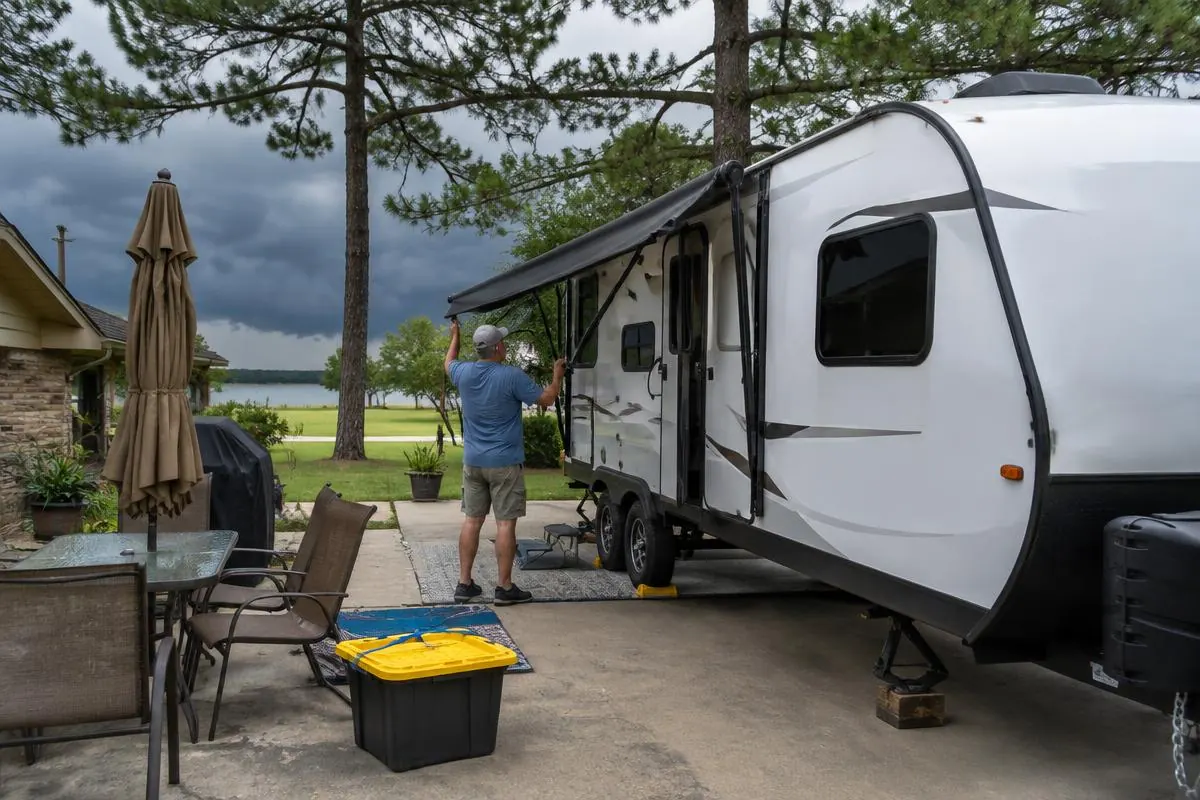
Retract the awning fully. Bring chairs, mats, grills and other loose items inside or to a safe location; they can become projectiles. Close and latch windows, vents, compartments and the entry door. Check tires and the spare for condition and correct inflation according to the RV maker's ratings. Verify that tow-vehicle lights, hitch, safety chains and breakaway equipment are ready before a storm approaches.
If your RV remains parked, ask the property manager what they require for storms. Choose a lawful location outside known flood exposure when possible, and avoid trees or structures that could fall on the rig. Stabilizers and wheel chocks help with ordinary parking, but they do not turn a trailer into a storm shelter. Unplug shore power and shut down systems only in the safe manner described by the RV and campground instructions.
After the storm, inspect before use
Return only when local authorities say it is safe. Avoid downed lines, standing water near electrical hookups and damaged trees. Look from the ground for shifted roof equipment, missing covers, broken windows and exterior damage. Do not connect to a wet or visibly damaged pedestal. If water has entered the RV, keep power off in affected areas until the electrical system can be evaluated safely.
Before using the RV again, inspect for new ceiling stains, wet cabinetry, soft floor areas and unusual odors. Document the damage for your records and insurance. Anytime Mobile RV Service provides on-site roof, electrical, plumbing and light structural assessments in the four-county Southeast Texas service area. Calling after the immediate danger has passed is safer than trying to repair storm damage while conditions are still changing.
Keep a written RV-specific checklist
Make a short checklist for your particular rig: where the shutoffs are, how the awning retracts, which exterior compartments latch, how to secure the hitch and where to find insurance documents. Practice the routine during calm weather. A checklist helps when a storm forecast changes quickly and several people are preparing to leave at once. It also reminds you to check the tow vehicle, not only the trailer.
If the RV is at a park, learn the site's evacuation rules and deadlines in advance. Some campgrounds close or require departure ahead of a storm. Ask where you can move a trailer if the usual tow vehicle is unavailable. Never rely on a service appointment as your evacuation plan; weather, closed roads and emergency priorities can prevent travel or repairs. Your safety and the official instructions for your area take priority over protecting the RV.
After a storm, separate immediate hazards from maintenance needs. A fallen power line, floodwater or the smell of propane calls for emergency help, not a routine repair request. For less urgent damage, take clear photos from safe ground, note the date and location, and avoid operating affected electrical or gas systems until checked. A technician can then assess repairs once roads and the parking site are safe to access.
Related help
Anytime Mobile RV Service comes to your RV seven days a week, 5 AM to 7 PM. Call +1 855-350-4192 to discuss your repair.