
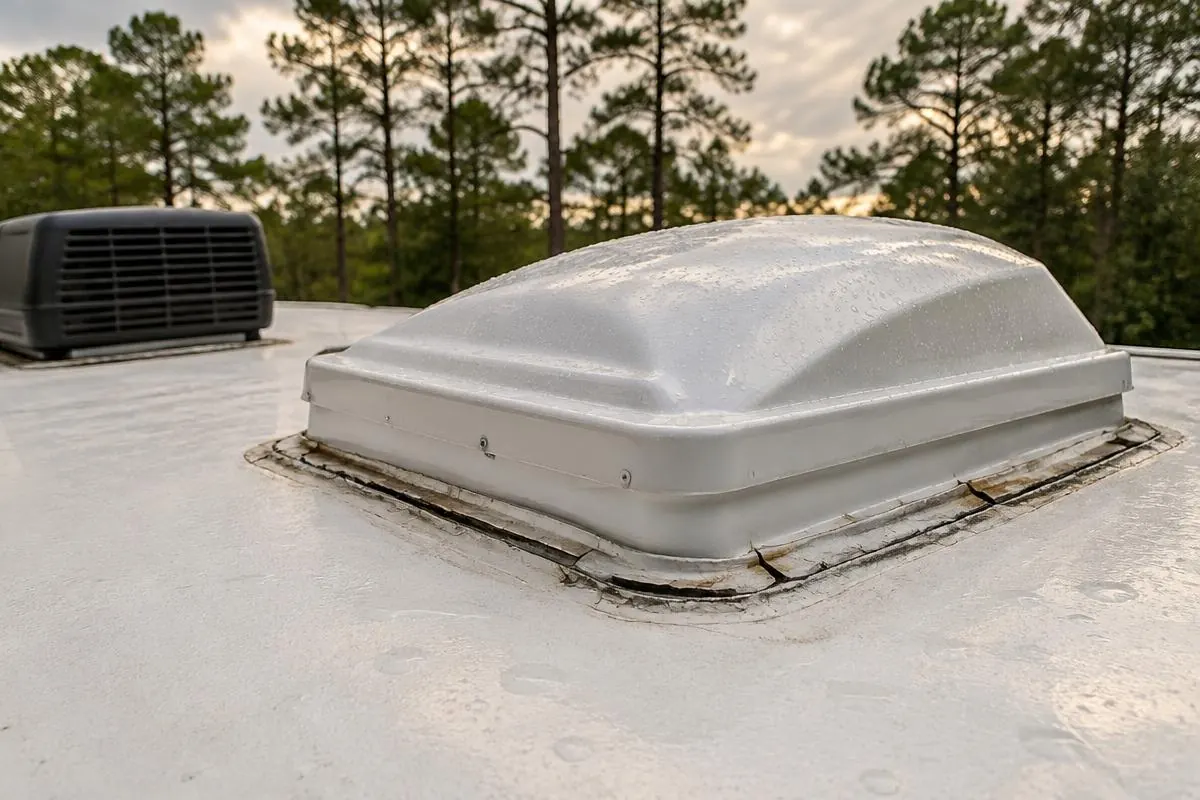
There is no single safe calendar interval for resealing every RV roof in Southeast Texas. Inspect the roof and its seams regularly, after heavy storms and before a long trip, then repair damaged sealant as soon as it is found. The correct timing depends on the roof material, the sealant used, sun exposure, age and whether the rig sits under trees or out in the open. A calendar reminder is useful, but its purpose is to prompt an inspection, not to replace one.
Inspect first, then reseal where needed
Start by checking the manufacturer's instructions for your particular roof. EPDM and TPO membranes, fiberglass roofs and metal roofs can require different products and preparation. A sealant suitable for one surface may not adhere to another. If you are unsure what membrane you have, do not put a new product on top of the old bead just because the tube says RV. Compatibility and a clean, sound surface matter more than a thick-looking patch.
Where water finds its way in
Pay attention to the edges around vents, skylights, antennas, A/C openings, ladder mounts and the front and rear roof transitions. Sealant can crack, lift, shrink or separate at any of these penetrations. Southeast Texas heat and heavy rain expose weak spots quickly. Water can travel inside a wall or ceiling before a stain appears, so the location of a stain may not be directly below the entry point.
From a safe vantage point, look for gaps, peeling edges, pinholes and areas where the sealant no longer bonds to either side of a seam. Inside, watch for ceiling discoloration, soft wall surfaces, damp cabinets and musty smells after rain. These clues do not identify the exact opening by themselves. Photograph them and record when they appeared; that information helps narrow the search when a technician inspects the roof.
Work safely and use the right repair method
Only walk on a roof when the RV maker says it is designed for foot traffic and you can reach it safely. Wet membranes, pine needles and narrow edges create a fall hazard. If access is uncertain, stay off the roof. A ground-level check with good photos is better than risking injury. Never press down hard on a soft-feeling area: hidden water damage can make a roof deck weaker than it looks.
For a small, accessible seal issue, follow the roof and sealant manufacturers' cleaning, removal, drying and curing directions exactly. Laying fresh sealant over loose, wet or dirty material can trap moisture and hide the opening without stopping it. Large open seams, multiple leak paths or widespread softness call for a fuller inspection. A surface bead cannot restore water-damaged decking or framing underneath it.
After a Gulf storm
Check visible roof edges and interior surfaces after wind-driven rain, especially if the awning, branches or debris struck the RV. Keep the interior dry and document any changes before covering a stain. Do not assume that no visible drip means there was no water intrusion. A new soft floor or damp cabinet may appear later, particularly around corners and openings where water migrates.
Anytime Mobile RV Service can assess roof seams and sealing needs at accessible RV parking locations in Hardin, Jefferson, Orange and Jasper counties. Call with the roof type if known, the location of any staining and photos of the suspect area. Planning a repair around dry weather and safe access gives the sealant a better chance to bond and cure correctly.
Build a repeatable inspection routine
Pick a time before spring travel and another before the wettest part of the year to inspect visible seals, and add a check after strong storms or branch contact. This is an inspection schedule, not a promise that a seam will last until the next date. A small opening discovered right after a storm is easier to address than water damage found months later. Record photos of each roof penetration from the same angles, so a change in a bead or lifting edge is easier to spot.
Check the exterior sidewall seams and upper corners too. Water that appears on an interior ceiling may come from a roof opening, but a poorly sealed corner or window can produce a similar symptom. Keep a note of which direction rain was blowing when moisture appeared. RVs in open storage lots may receive direct sun for many hours, while ones under pines can collect needles and hold damp debris. Both situations deserve attention for different reasons.
Ask for the exact product used during a repair and keep that information with your maintenance notes. It will help when future work is needed. If an old sealant is brittle or separating over a long run, a few fresh dabs may not be enough. A professional can determine whether the old material needs removal and whether the underlying surface remains sound before resealing.
Related help
Anytime Mobile RV Service comes to your RV seven days a week, 5 AM to 7 PM. Call +1 855-350-4192 to discuss your repair.